

SHUNT – Sustainable HUNTing system in the Dahomey Gap (West Africa)
Co-coordinator (2023-2027)
Funding: Laboratoire Mixte International IRD
Project ID: SHUNT
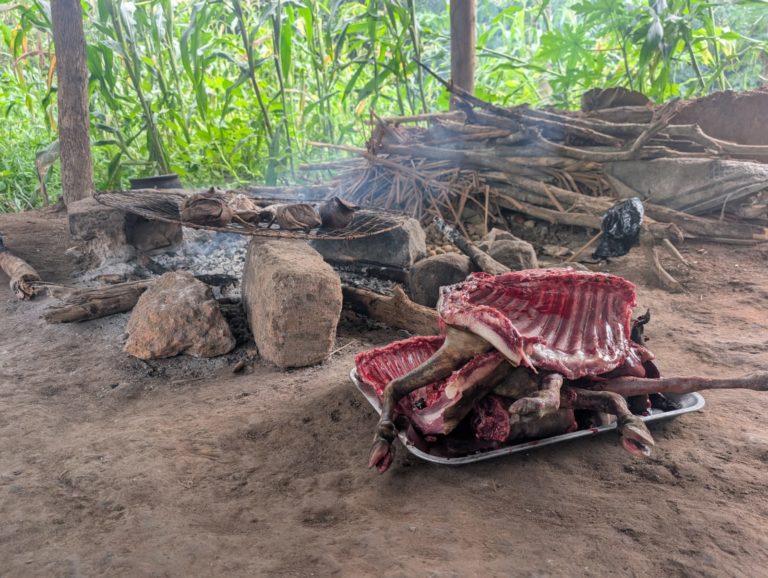
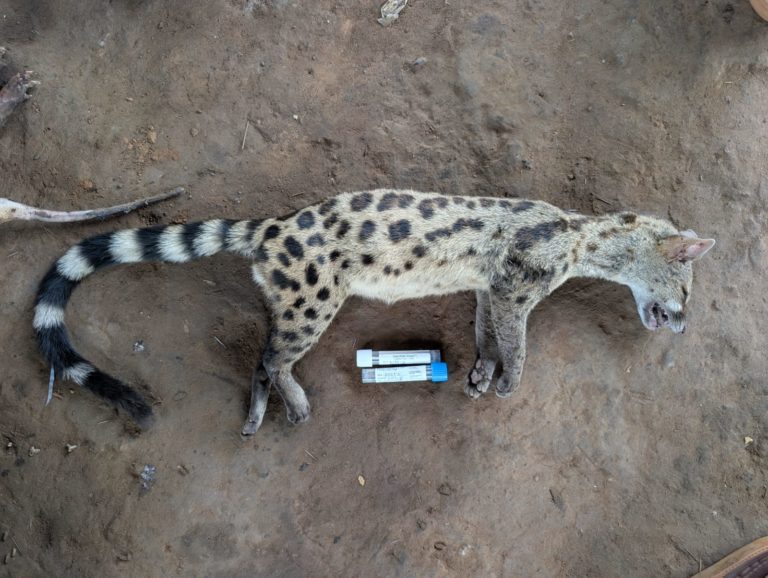
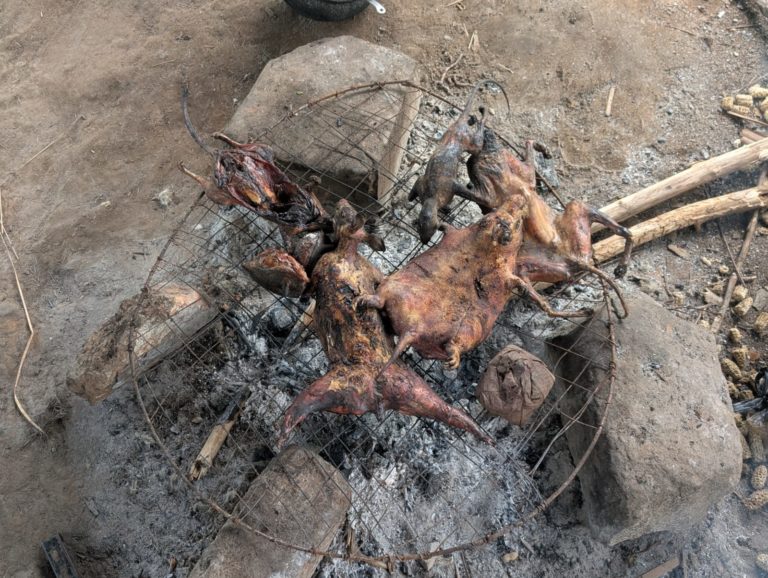
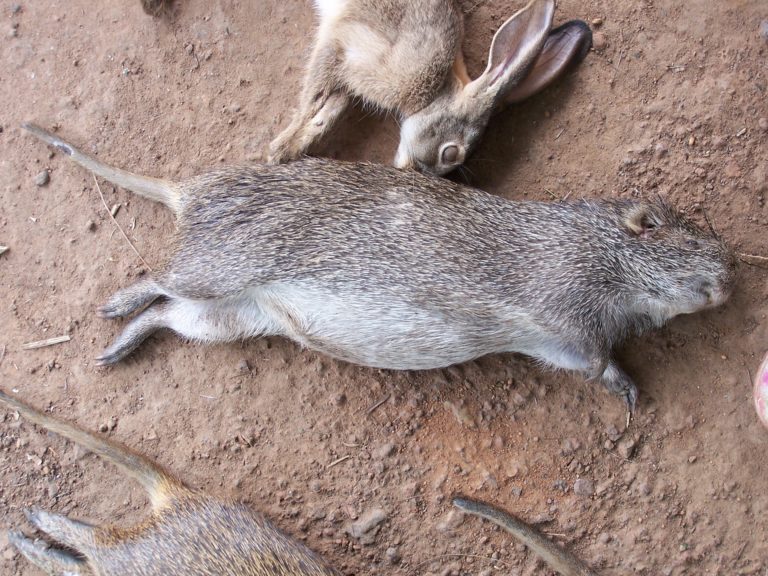
Unsustainable wildlife hunting and trade are among the most pressing conservation and public health challenges in tropical Africa. While bushmeat remains an essential source of food and income for many rural communities, increasing hunting pressure threatens biodiversity, ecosystem functioning and human health through the emergence of zoonotic diseases. Developing sustainable solutions therefore requires an integrated understanding of the ecological, social and economic drivers shaping wildlife use.
Our general objective is to evaluate the sustainability of wildlife hunting and trade in southern Benin by investigating the socio-ecological system linking the Lama Classified Forest, the Tègon bushmeat market and the Abomey traditional medicine market. Through this integrated platform, we aim to identify the ecological and health impacts of hunting while assessing its importance for local livelihoods.
Through SHUNT, we implement a transdisciplinary approach combining biodiversity monitoring, genomics, ecosystem health assessment, zoonotic surveillance, socio-economic analyses and participatory research with local communities and stakeholders. By integrating these complementary perspectives, SHUNT will provide science-based recommendations to promote the sustainable management of wildlife resources and strengthen One Health strategies in tropical Africa.
Emilie Lecompte (co-coordinator)
Centre de Recherche sur la Biodiversité et l’Environnement (CRBE)
Université de Toulouse
France
Chabi A.M.S. Djagoun (co-coordinator)
Laboratoire d’Ecologie Appliquée (LEA)
Université d’Abomey Calavi
Benin
Fifanou Vodouhé
Laboratoire d’Analyse et de Recherche sur les Dynamiques Économiques et Sociales (LARDES)
Université de Parakou
Benin
Anges Yadoulèton
Laboratoire de Diagnostic des Fièvres Hémorragiques (LDFH)
Ministère de la Santé
Cotonou
Benin
Jean-Robert Klotoé
Unité de Recherche en Microbiologie Appliquée (URMAPHA)
Université d’Abomey Calavi
Benin
Bruno Djossa
Laboratoire des Sciences Végétales, Horticoles et Forestières (LaSVHF)
Université Nationale d’Agriculture
Porto-Novo
Benin
Assessing the impact of the wildlife trade in West Africa (Benin): Functional diversity…
Actors’ perceptions of profitability along a bushmeat commodity chain in West Africa…
Systematic review of sustainability assessment approaches for wildlife exploitation…