

BUSHRISK – Tracking the bushmeat: a molecular framework for tracing the African bushmeat trade and risks of emerging diseases
Project coordinator (2018-2022)
Funding: FCT (Fundação para a Ciência e a Tecnologia) – Projetos de Investigação Científica e Desenvolvimento Tecnológico (IC&DT) – 02/SAICT/2017
Project ID: n.º 032130
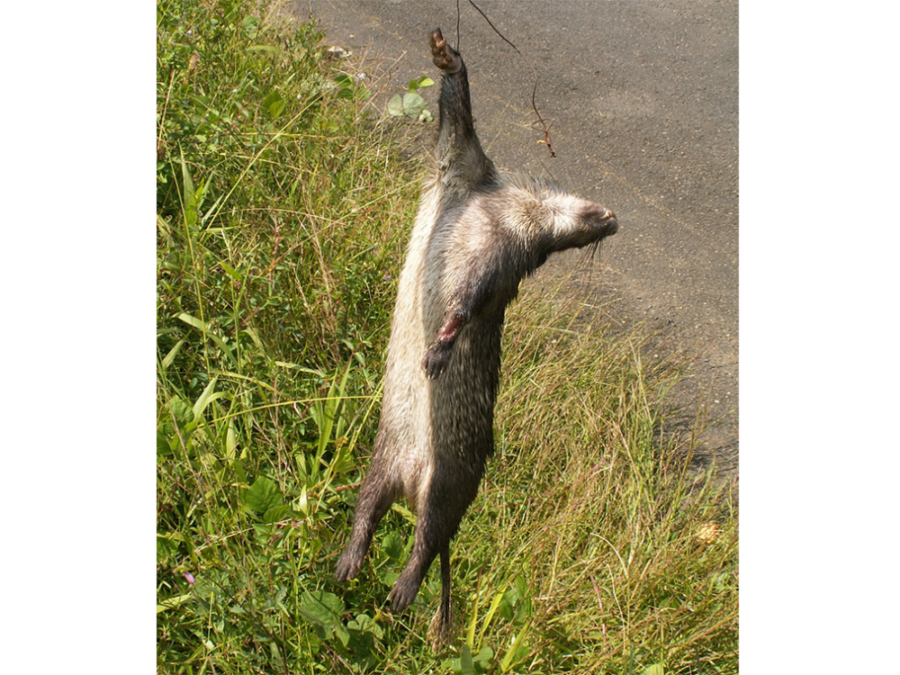
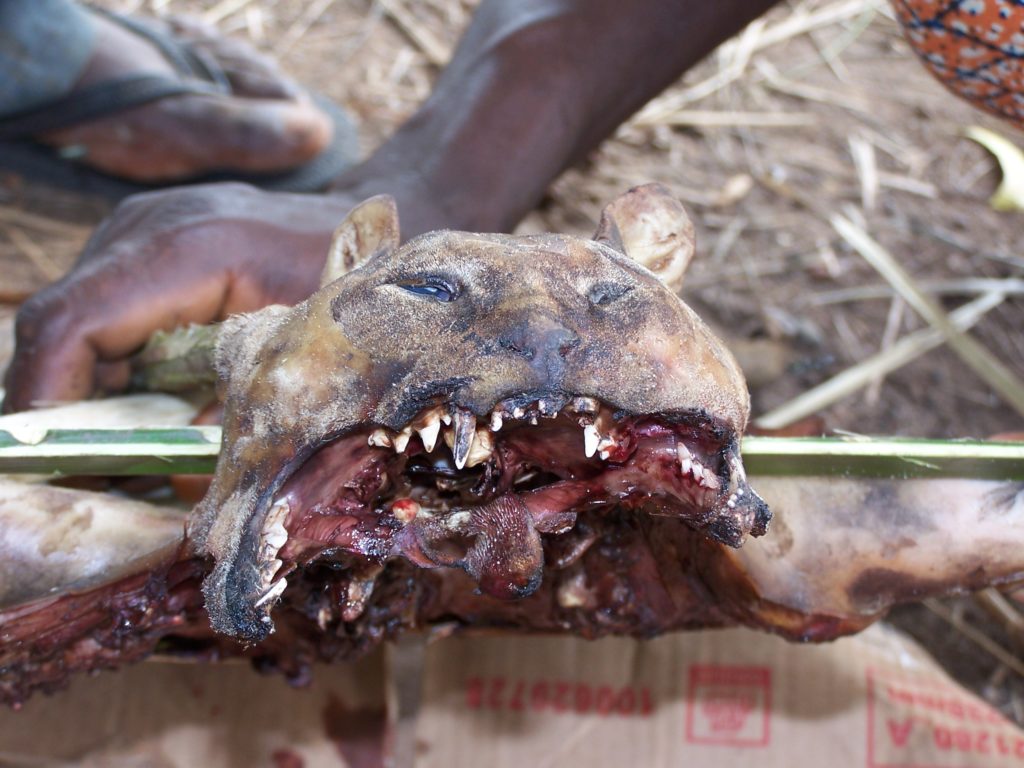
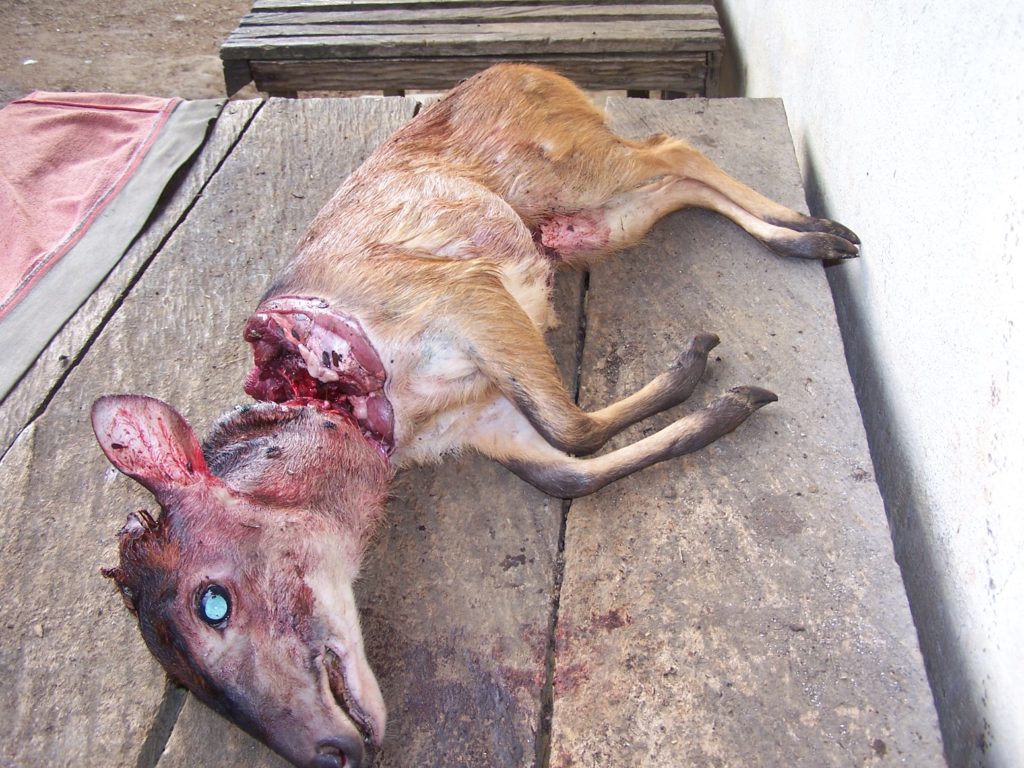
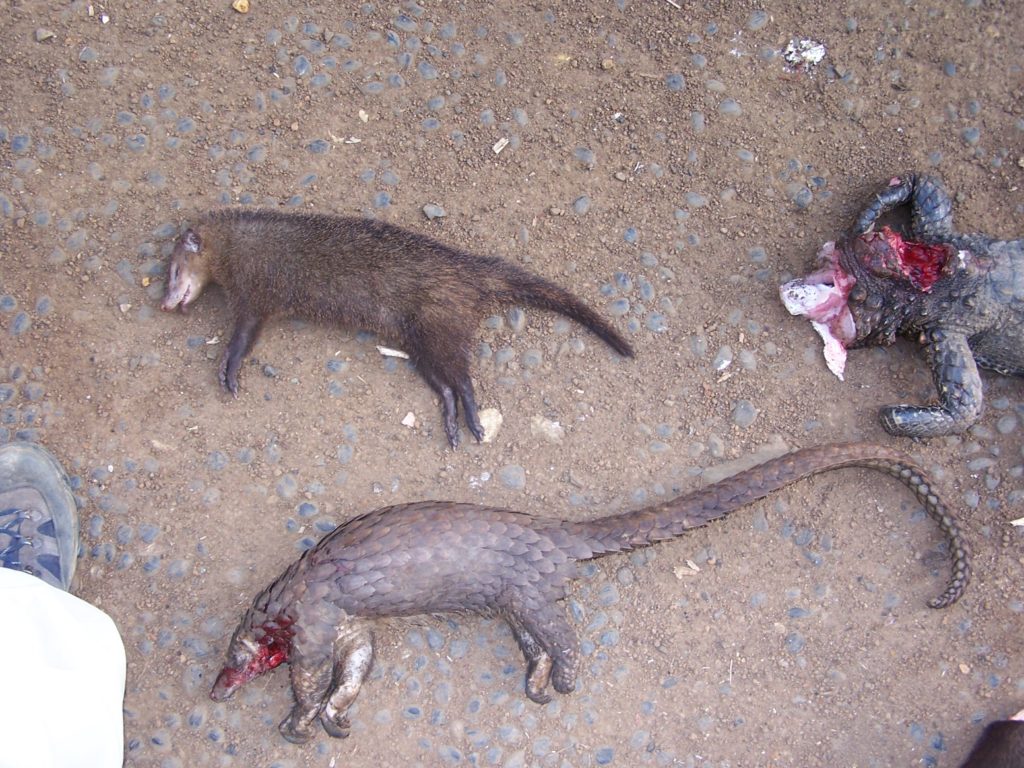
The unsustainable harvesting of wildlife has a direct impact on ecosystem services since habitat degradation and faunal depletion are linked to the propagation of emerging diseases in human populations. In Africa, bushmeat consumption is prevalent and has been at the origin of major pandemics. In Europe, millions of tons of bushmeat illegally enter through domestic flights each year, broadening the risks of zoonotic spread to northern countries. So far, health watches targeting the issue of zoonotic emerging diseases have suffered from the absence of fine scale characterization of the bushmeat species, smoked and processed meat challenging the recognition of carcasses.
BUSHRISK assesses the link between wildlife depletion and emerging diseases in the context of the molecular tracing of the African bushmeat trade. We use high-throughput sequencing to provide a fine-scale assessment of the diversity of host (mammals) and pathogens along the local-to-global bushmeat network, relying on the design of turnkey molecular tools and the exploratory use of macro-ecology approaches.
BUSHRISK sets up an original, integrative framework linking biodiversity and health watch through the molecular biogeography of both bushmeat species and their pathobiomes. Deliverables include molecular-based turnkey tools usable by customs and national bodies involved in the bushmeat trade survey for a real-time assessment of the bushmeat diversity and pathobiomes in Africa and Europe.
Agostinho Antunes Pereira, João Paulo Rodrigues Machado, Parthibaraj Anoop Alex, Emanuel Filipe Escaleira Maldonado, Cristiana Ivone Tavares Moreira, Daniela Martins Almeida
CIIMAR – Interdisciplinarity Centre of Marine and Environmental Research
University of Porto
Portugal
Collaborators
Sery Gonedelé Bi, Université Félix Houphouët-Boigny, Abidjan, Côte d’Ivoire
Anne-Lise Chaber, University of Adelaide, Australia
Fabien Leprieur, MARBEC, Université de Montpellier, France
Preservative chemicals as a new health risk related to traditional medicine…
Assessing the impact of the wildlife trade in West Africa…
Genetic tracing of the illegal trade of the white-bellied pangolin…
Conservation genetics of the white‐bellied pangolin in West Africa: A story of lineage admixture…
Vendors’ perceptions on the bushmeat trade dynamics across West and central Africa…
Systematic review of bushmeat surveys in the tropical African rainforest and recommendations…
Is social media the new wet market? Social media platforms facilitate…
Investigating infectious organisms of public health concern…
Examining the international bushmeat traffic in Belgium…
Impact of COVID-19 on the temporal dynamics of the bushmeat trade…
Systematic review of health risk assessment in Africa’s bushmeat trade…